
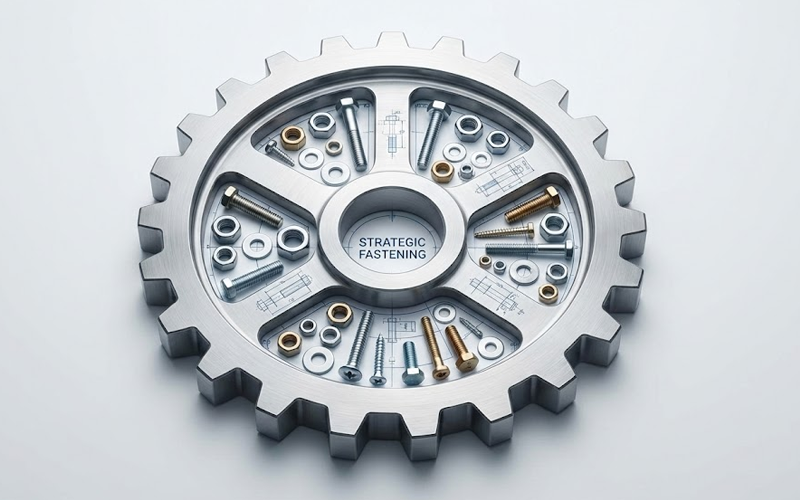
Behind every successful, efficient, and financially sound assembly operation is an intentional fastener strategy.
Fasteners Are Not a Commodity—They’re an Engineering Decision
Fasteners may be small, but they carry significant responsibility. They determine the performance, safety, reliability, and cost of every assembly. When a company buys “whatever works,” issues often follow:
- Inconsistent quality
- Failures in the field
- Increased scrap or rework
- Higher long-term costs from cheap but unreliable parts
A fastener strategy ensures you’re not simply buying components—you’re selecting the right ones for your application, your environment, and your long-term goals.
Start With the Basics: What Should You Standardize?
When we begin working with a new customer, one of the first questions we ask is:
“What is your fastener strategy?”
More often than not, it hasn’t been given any thought. A well-defined fastener strategy establishes intentional choices for:
• Preferred finishes
Corrosion resistance, performance requirements, and cost vary widely. Selecting a standard finish simplifies purchasing and eliminates unnecessary variation.
• Standard drive styles
Phillips? Torx? Hex? Standardizing improves assembly efficiency, reduces tool variety, and minimizes operator error.
• Standard fastener families
Choosing which styles (screws, bolts, washers, inserts, etc.) should be used across assemblies drastically cuts your SKU count.
When engineering teams align on these preferences, the entire organization—purchasing, production, logistics, and quality—benefits.
A Fastener Strategy Is a Partnership, Not a Purchase
Choosing fasteners isn’t about pressing a button and buying the cheapest part on a spreadsheet. The cheapest fastener can quickly become your most expensive part. It’s about engineering support, application insight, and long-term reliability.
We partner with companies that value this holistic approach—those who want more than just a supplier. They want expertise, consultation, and a strategy that sets them up for success today and years down the road.
The Bottom Line
Fasteners may be small, but their impact is large. Building a fastener strategy ensures your teams:
- Use the right parts
- Use them the right way
- Avoid unnecessary variation
- Reduce cost and risk
- Improve assembly performance
It’s time to stop treating fasteners like a commodity—and start treating them like the critical engineering components they are.
Ready to develop your First-Choice Fastener List?
We’re here to build it with you.